Well, I suppose not much has changed since then... except that I moved back home, got a great job, and we moved into an awesome little house in south Minneapolis.
Here's to our triumphant return to blogging!
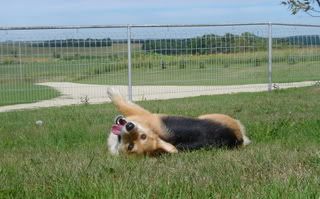
Winnie loves Minneapolis!

 I'm in the Tucson airport waiting for my flight to leave, and since the airport kindly provides free Wi-Fi, I thought I'd post a little update...
 Our poor little Pooh Bear has been fighting a strange mystery disease since Thanksgiving. Everything started with urinary tract signs (mostly frequent urination, peeing in the house, etc). She was started on an antibiotic and all those signs cleared up, but a couple of days later she developed a fever. That started us on a wild goose change through her abdomen looking for the cause- did a bladder infection ascend to her kidneys? Did she eat something inappropriate? We sent out a urine culture (negative), checked bloodwork (normal aside from an elevated white blood cell count), and checked for tick-borne diseases (negative, plus she's on monthly tick preventatives). Radiographs revealed an enlarged spleen, so she had an abdominal ultrasound. Aside from a slightly prominent spleen, no other abnormalities were noted. A splenic aspirate was sent out- nothing really significant there either.


 Yes, I am a fish nerd :) Back to work tomorrow!
 After having a couple of rotations on emergency overnights and spending some time with urgent care on days, I'm starting to get a good sense of situations when owners should get their pets in ASAP. Sometimes it's safe to wait for a day or two to see if things resolve on their own, but sometimes there just isn't time to wait. For example:
 Exotic pets acting abnormal in any way. Aside from ferrets, almost all exotic species are prey animals that are hard-wired to never show signs of disease or injury. If these animals go off of food, start sleeping more than normal, stop vocalizing (if it's a bird), start vocalizing (if it's a small mammal), hide when they would normally be active, or do anything out of the ordinary, it could well be a sign of disease. Often, by the time you can obviously tell there is something wrong, exotic species are severely compromised. Better safe than sorry with exotics!
 OCD could stand for Obsessive Compulsive Disorder (which pets can suffer from), but today it stood for Osteochondrosis (or Osteochondritis Dissecans). OCD is a developmental orthopedic disease that typically causes lameness in puppies 7 to 12 months old, and most commonly affects the shoulder, elbow, stifle, or hock joints. OCD occurs when part of the smooth cartilage that lines the joint surface doesn't form correctly, resulting in a defect in what should be a nice smooth joint surface. The joint ends up arthritic and painful, leading to limping in puppies that should be bouncing off the walls.
 Feline malocclusions. A fancy way to say that the teeth aren't lined up right, malocclusions are much more common in dogs than cats because dogs' heads come in a much wider variety of shapes and sizes. The photo to the left is a canine (dog) canine (tooth) malocclusion, in which the lower tooth is contacting the upper hard palate, causing damage to the tissue. Despite being more common in dogs, cats do indeed get malocclusions, and I learned that thanks to my own kitty, Taiko.
 Wow- long time, no blog! It's only been a couple of months since graduation, but it feels like forever since the last time I was in VMC. Since then, I've been across Europe and back, up to the cabin, and on a marathon 33 hour drive from Minnesota to Tucson. We managed to squeeze everything that I thought I'd need for my internship (including the cat and the hedgehog) into the Fit. I brought every book and set of notes that I thought might be useful, which turned out to be quite a lot... and poor Chris had to haul all my boxes of books into the new apartment in 108 degree temperatures. Welcome to Tucson!
 We spent the first week in Tucson exploring, looking especially for the best food Arizona had to offer. We found the best tacos at the Taqueria Pico de Gallo, a little hole-in-the-wall that used to be a taco stand. They've since grown to have enclosed seating, but you still bus your own food and clean up after yourself. They make fresh corn tortillas while you wait, and serve a type of pico de gallo made of big chunks of fruit covered in chili powder and salt. Yum! The farmer's markets had the best tortillas and salsas, although fresh produce is sort of lacking at this time of year.
 good technicians are worth their weight in gold (I already knew that, but now that I'm a doctor it's even more obvious).
 puppy and kitten visits are important antidotes to euthanasia appointments.
